Showing posts sorted by relevance for query big head. Sort by date Show all posts

Thursday, 7 June 2012

Balloon Face And Balloon Heads

Phoebe Chan (left) with model Elaine Chin, who is wearing a wedding dress made of balloons. Photo: Nora Tam

Phoebe Chan Kin-pui is one of only four certified balloon artists in Hong Kong. And apparently she has "rankled some clowns and party entertainers, who claim she is taking away their clients".

I just think her face looks like a balloon; colourful and bursting with happiness!


While I'm at it, Asia's richest man Li Ka-shing has a balloon head; hugely inflated and bursting with billions!

 Li Ka Shing Balloon Head


Mr Mackey from South Park


Related Posts


Reference

Here comes the bride, with 300 balloons (SCMP; paywall)
Jennifer Cheng
May 26, 2012    

Of all the ways to take your vows with wows, few could match walking down the aisle in a wedding dress made of balloons.

And in Hong Kong, where weddings are no small affairs, brides-to-be seeking that extra lift are looking to Phoebe Chan Kin-pui.

It's an idea that's certainly taking off around the world - a wedding gown worn by the Duchess of Cambridge, Kate Middleton (whose parents built a fortune in the party supply trade), is said to have inspired a copy made with 5,000 balloons by a British artist.

Chan, 38, is one of only four certified balloon artists in Hong Kong - and these are no inflated qualifications, as aspirants have to sit written, oral and practical examinations.

And just in case you think a balloon artist is some sort of shrinking violet, Chan's "day job" involves teaching construction workers how to handle building machinery safely. Her balloon artist "studio" is in the workshop among the shovels and concrete mixers and pneumatic drills of her training institute.

Chan's talent with balloons was recognised in March when she was named New Artist of the Year at the 2012 World Balloon Convention in Dallas, Texas. Her dresses and decorative arrangements have won prizes in Belgium, Japan and Malaysia.

"Balloon art is actually really easy, and you can feel accomplished quickly after creating something in a short time," the self-taught artist said. "It takes me six hours to weave a dress, but can you imagine how long it would take to knit a garment that size with yarn?"

She took up balloon art two years ago after watching a television show on it with her two young children.

Now she offers balloon art classes - sometimes free - for special groups.

Chan's stellar rise as a balloon artist has rankled some clowns and party entertainers, who claim she is taking away their clients. Chan uses about 300 balloons to make a dress, and has received many orders.

"The reason my dresses are so popular is because they are formfitting. While other designers in the world just slip the dress over their models' heads, I design the dress to be so tight that it presses into the flesh, which narrows the waist."

She said her balloon dresses can be kept for up to a week, but can only be worn once. "The dress is all for photos and memories."

Chan is also negotiating to design costumes for a major male pop star to wear at his concerts next month.


Li Ka-shing spells out sons' futures (SCMP; paywall)
Asia's richest man to split business empire in a way that should prevent conflict
May Chan
May 26, 2012    
    Email to friend Print a copy Bookmark and Share

Li Ka-shing, Asia's richest man, yesterday spelled out a succession plan to split his business empire between his two sons in a way he said would ensure no conflict between them.

Li (pictured) said that elder son Victor Li Tzar-kuoi would take the helm of property group Cheung Kong (Holdings) (SEHK: 0001) and conglomerate Hutchison Whampoa (SEHK: 0013).

"As for my other son [Richard Li Tzar-kai], there are some things that he is very interested in. He will have my full support … now that he has already owned several sizeable companies.

"The asset values of the businesses that he owns will go up several times over, so he will also have a very successful career.

"And there will be no conflict among their businesses."

Li Ka-shing, who turns 84 next month, was rated last year by Forbes magazine as the ninth-richest person in the world - as well as Asia's richest - with an estimated wealth of US$25.5 billion.

He told a press conference yesterday after the annual meetings of Cheung Kong and Hutchison that younger son Richard was in talks with "several sizeable companies" for acquisitions in industries outside the business scope of Cheung Kong and Hutchison. He said they were not media or entertainment businesses, but were "long-term" businesses that Richard liked.

Victor would own more than 40 per cent of Cheung Kong, his father said, and 35.5 per cent of Husky Energy, a Canadian oil company.

Li Ka-shing said he had "no plans" to retire, but had thought out the succession plan for a long time.

Victor, who was also at the press conference, said he was happy with his father's decision. Victor has been managing director at Cheung Kong and deputy chairman at Hutchison for more than 10 years.

Richard, who is not on the board of either company, was not available for comment. He left Hutchison in 2000 to focus on building his own business empire. He is chairman of PCCW (SEHK: 0008), the biggest telecommunications company in Hong Kong.

Based on Cheung Kong's closing share price of HK$91.50 yesterday, the company's market capitalisation stands at HK$211.93 billion, making Li Ka-shing's stake worth at least HK$83.56 billion.

Husky Energy was worth about C$22.84 billion (HK$172.84 billion) based on Thursday's closing price, valuing his stake at C$8.11 billion.

The 40 per cent stake in Cheung Kong, which owns 49.97 per cent of Hutchison, effectively gives Victor control of the conglomerate. Hutchison closed at HK$66.55 yesterday, giving it a market capitalisation of HK$283.73 billion.

Shares in Cheung Kong and Hutchison that Li Ka-shing has bought over the past two years will go into the Li Ka Shing Foundation, a charity that will be overseen by both Richard and Victor upon their father's retirement.

The foundation also owns shares in Facebook.

Hutchison boasts the world's biggest port and telecommunications operations, in 14 countries. Its activities also span infrastructure, retailing and property development.

Li Ka-shing remains upbeat about Hutchison's earnings prospects, despite global uncertainty as a result of the euro zone crisis. He also said he was optimistic about business opportunities in Europe.

"We definitely won't decrease our investment in Hong Kong," he said, when asked whether Hutchison would make further acquisitions in Europe. We want to invest in Hong Kong as long as it can provide us with a harmonious macro-environment. If not, we go invest somewhere else, overseas."

Li, who voted for Henry Tang Ying-yen instead of winner Leung Chun-ying in this year's elections for Hong Kong chief executive, refused to comment on Leung. But he said the chief executive-elect must prove that he could protect the Basic Law (the city's mini-constitution) and Hong Kong's core values, including the rule of law and freedom.

He also said he welcomed policies to solve housing problems facing low-income groups in the city, but said he hoped the government would maintain a stable land supply.


Monday, 16 May 2011

Big Head Little Body

Scott Parker has a relatively large head compared to his torso. Pic from Action Images.

... just sayin'!

West Ham United and England midfielder Scott Parker is a great footballer. He won the 2011 Football Writers' Association's Footballer of the Year award in the English Premier League.

Are there other notable celebrities who have similar physical attributes? Or perhaps there are some people who possess small heads and large bodies? Human form and human diversity ... fascinating.


Related Posts

A Body Like A Fish

A Face Like A Fish

A Right Wally

Doppelgangers

Wednesday, 30 November 2011

Lo and Behold, The Pot Changes

Baby-faced journalist Alex Lo has changed his look significantly. Perhaps this was induced by a major event or turning point in Lo's life, or maybe (although unlikely) comments on this site played a role?

Here's the latest mugshot of Alex Lo:


And here's his previous mugshot:Pics from SCMP


Related Posts

A Body Like A Fish

A Face Like A Fish

A Right Wally

Big Head Little Body

Doppelgangers

Wednesday, 7 December 2011

0935 HKSAR Name of the Day

Ivana Wong Yuen-chi, singer-songwriter, Hong Kong.

Ivana Wong has sticky-out ears and looks like a pixie. Just saying' see also Scott Parker in Big Head Little Body and Remus Choy


About Novel HKSAR Names
Name Category: Rare

Sunday, 14 August 2011

Healthy And Fit From My Perspective

I don't follow beauty pageants but I do follow local bloggers ... not that I am implying that they are the same thing ... which they are not!

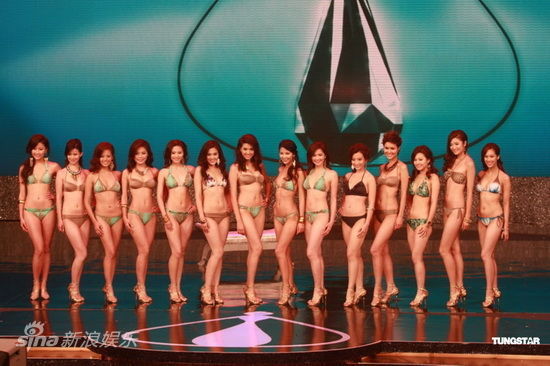
Anyways, the Miss Hong Kong 2011 title was brought to my attention by Spike at Hongkie Town (see post here) and just having a glimpse at some of the contestants made me wince at their relative states of "healthiness".

Rebecca Zhu, winner of Miss Hong Kong 2011, looks to have a well-conditioned and healthy body. From reports, she is a ballerina so it stands to reason that her body is well conditioned. However, her fellow competitors did not seem to be up to challenging her in terms of physical appearance. Pic from here


Hyman Chu, runner-up, looks poorly conditioned and would appear to have trouble lifting a 5kg bag of brown rice or an LV handbag filled with luxury trinkets. Pic from here

[Note: yes, this blog will highlight Hyman's name in a future post. See also 0002 HKSAR Name of the Day]


Gemma Choi, apparently a favourite, simply has an odd-looking appearance for a beauty queen contestant. Clearly, she has a big head and a little body (see post here). Pic from here


Nicole Cheung could do with exercising, especially working her chubby legs. Pic from here


In contrast, take a look at super-conditioned Kimiko Date-Krumm, a 40-year-old professional tennis player.

Kimiko Date-Krumm in swimwear. Pic from here


Here's what Kimiko looked like in 1996. Pic from here


Aside: Kimiko Date-Krumm's tennis career is all the more remarkable considering the Asian obstacles that she faced. She is naturally left-handed but was forced to play right-handed (just as many left-handed Asians are forced to use chopsticks with their right hands). Even with that disadvantage, Kimiko was ranked World No 4 in 1995 before retiring in 1996, 4 days before her 26th birthday. Almost 12 years later, in April 2008, Kimiko made her comeback, which has been successful.


Just imagine what Kimiko Date could have achieved in tennis had she not retired. We can only speculate and romanticize!


Back to the plot: Swimsuits. Out of the 14 Miss Hong Kong contestants, why did 4 girls not wear matching bikinis?


Giselle Lam does not appear to have a clue about matching bikinis. Pic from here

The 14 contestants of Miss Hong Kong 2011. Pic from here


The Good News is that these poorly-conditioned girls are relatively young, and therefore have time on their side to buck up their ideas and lifestyles. Generally, if people are willing to listen to experienced mentors and qualified experts, then the goal of having a healthy, balanced lifestyle is really not that hard to achieve.

One example of a local celebrity that springs to mind is veteran artiste Dodo Cheng (yes, another future HKSAR Name of the Day). She discovered exercise and fitness as well as eating healthily relatively late in her career and life, but since then she is reported to need her daily fix of exercise otherwise she suffers withdrawal symptoms.

There are many examples of Kimikos and Dodos out there who can help inspire us to healthy lifestyles.


Related Post
Wimbledon Wow Factor: Kimiko Date (perceptions of female tennis players)

Blog of Note
Tennisology 101 (an insightful blog about the world of professional tennis)

Tuesday, 20 September 2011

0896 HKSAR Name of the Day

Remus Choy Yat-kit, canto-pop star (Grasshopper), Hong Kong

Remus Choy was severely "mentally disturbed" by the incident [i.e. a car crash caused by drink-driving] and needed to see a doctor. Pic by Sam Tsang

see 0315 HKSAR Name of the Day

About Novel HKSAR Names
Name Category: Rare


Note: Remus also appears to have a Big Head Little Body (similar to Scott Parker)


Reference: Singer admits drinking before crashing Bentley (SCMP; paywall)
Remus Choy of Grasshoppers tells court he drank four glasses of wine before driving into railings
Austin Chiu
Jun 11, 2011

Canto-pop star Remus Choy Yat-kit crashed his new Bentley after driving it for only a week, a court heard yesterday.

Choy, 44, of the pop group Grasshopper, admitted he had been drink-driving when he crashed his car in Pok Fu Lam last month.

He told Eastern Court he was so "mentally disturbed" by the accident that he needed to see a doctor. He pleaded guilty to careless driving and drink-driving.

The court heard that Choy crashed his Bentley after he drank four glasses of red wine and slept for four hours. The crash took place in Sassoon Road, near Queen Mary Hospital at about 7.40am on May 1.

A breath test showed a reading of 66 micrograms of alcohol per 100 millilitres or air. The legal limit is 22 micrograms.

Wong Ching-yu SC, for Choy, said his client had the new car for only a week before the crash and he was not familiar with its operations.

The court heard that the luxury car hit a metal railing before knocking down a mailbox and a fire hydrant.

The vehicle continued to move uphill in Sassoon Road for about 200 metres, hitting a safety barrier before it eventually came to a halt.

Wong told the court Choy shared two bottles of wine with his friends the night before the crash. He drank fewer than four glasses of wine and had slept for four hours.

Choy was released yesterday on HK$5,000 bail. Sentencing was adjourned to June 24, pending a community service report.

Choy suffered scratches to his right arm. He refused to be admitted to hospital for medical treatment.

Acting Principal Magistrate David Dufton said Choy's alcohol level would not be that high if he had rested. He also questioned why Choy's car continued to move after the first crash, adding that it seemed Choy intended to leave the scene.

Wong explained that it was because Choy was shocked at the time and accidentally stepped on the accelerator, causing the car to move 200 metres further.

He asked the magistrate to give Choy the benefit of doubt, since there was no evidence proving he tried to flee the scene.

Wong said Choy was remorseful. He had refrained from driving since and hired a personal driver. Wong said Choy was severely "mentally disturbed" by the incident and needed to see a doctor.

Choy has been fined six times for traffic offences, including five for speeding.

Grasshopper is a trio comprising Choy, his brother Calvin Choy Yat-chi, and Edmond So Chi-wai.

austin.chiu@scmp.com

Wednesday, 19 September 2012

Big Heads

Big Heads look strange ... particularly in real situations ...


 Hong Kong Hospital Authority chairman Anthony Wu Ting-yuk

It is always an oxymoron to see overweight, unhealthy, cigarette-smoking medical doctors. Although Anthony Wu is no medical doctor, he is chief of Hong Kong's public hospitals and is overweight (if not obese).


Ling Jihua, a key aide of China President Hu Jintao

Is there anything strange and peculiar about this photo? Is the swept-back hair also photoshopped? Ling Jihua looks more like a cartoon character out of the Simpsons or Futurama.


References


Hospital Authority chairman has term extended (SCMP; paywall)

Anthony Wu's term extended one year to give some stability to volatile administration
Friday, 14 September, 2012, 12:00am

Emily Tsang and Olga Wong

Anthony Wu Ting-yuk has been appointed for a further year as Hospital Authority chairman amid talk Chief Executive Leung Chun-ying's government is suffering a recruitment crisis as it deals with a host of controversies.

Wu, who had not been expected to renew his contract when it expires in two months, is the authority's longest-serving chairman. By the end of his new term he will have filled the post for nine years.

Observers say Leung is opting for stability amid turbulence, while having difficulty finding people willing to take the heat of a government post.

"It may be the right way to keep things unchanged for a while when the government is surrounded by so many flames," Polytechnic University social scientist Chung Kim-wah said. "After all, any new person appointed may risk drawing further attacks."

A source close to the government agreed, saying Wu's reappointment was " an appropriate arrangement for the new government, especially when it is seeking stability".

Wu, once a supporter of failed chief executive candidate Henry Tang Ying-yen, had already been given a two-year extension after an initial six-year term.

Former secretary for education Dr Arthur Li Kwok-cheung was once tipped to succeed him, but public hospital doctors said they were uneasy with Li's "heavy handed" leadership style.

"Both Wu and Li have their supporters and opposers, but I guess Li may draw comparatively more concern from doctors," former Public Doctors' Association president Dr Ho Pak-leung said.

Leung appointed five more members to his team yesterday, including three undersecretaries and two political assistants. But his team is still thought to be short seven under-secretaries and 13 political assistants.

Hints have been emerging that he is set to scale down the government restructuring plan that failed to reach the Legislative Council in its previous term because of lawmakers' delaying tactics.

A source familiar with the situation said earlier that Leung had already shelved the plan to create deputy posts for the chief secretary and financial secretary as a result of political pressure.

Wu said yesterday he was honoured to stay on.

"One of the priorities that the Hospital Authority needs to accomplish is to manage patient waiting times amid the challenges of an ageing population and the shortfall in medical manpower," he said.

"Certainly we will continue to find ways to improve the working conditions and environment for our staff."

The authority's chief executive, Dr Leung Pak-yin, said his management team was delighted by the reappointment.

Wu is not the first Tang backer to be reappointed by Leung. Allan Zeman, Ayesha Macpherson Lau and Tang's brother Tom Tang Chung-yen have also stayed on in various statutory bodies.


Car crash scandal complicates leadership transition (SCMP; paywall)

Emerging details of Beijing car crash in March have served to complicate an already uncertain picture after Bo Xilai's downfall

Wang Xiangwei
Monday, 03 September, 2012, 12:00am

As a popular Chinese idiom goes, misfortune never comes alone. On March 15, the Communist Party leadership sacked Bo Xilai from his position as party chief of Chongqing, bringing to the public's attention one of the biggest political crises to beset the party in a decade.

Three days later, an accident in Beijing, involving a Ferrari, the son of one of the mainland's most powerful officials and two young, ethnic-minority girls, served as a double whammy to the party's leadership.

The political ramifications from the twin scandals have added intrigue and additional complications to the party's once-in-a-decade leadership reshuffle scheduled for the 18th Party Congress. The opening date of the congress hasn't been officially announced, but analysts expect it to start in the second half of next month.

While the Bo scandal has been extensively reported on since March, details only recently began to emerge in the crash of a black Ferrari that killed Ling Gu, the son of Ling Jihua, a key aide of President Hu Jintao, and injured two girls. Details of the accident are in today's South China Morning Post.

Despite strong reactions from within the party, Chinese leaders seem to have decided to sweep the crash under the carpet, presumably because the party can't afford another major scandal made public so close to the leadership transition.

Saturday's announcement that Ling Jihua had been appointed to head the United Front Work Department served as a strong indication that Hu wants to engineer a "soft landing" for his protégé, but it also means that the prospects of Ling securing a seat on the Politburo have dimmed greatly.

Until Saturday, Ling was the head of the General Office of the Communist Party - equivalent to the job of chief of staff to the American president. He had complete control of access to Hu's office and set his agenda. Before the crash, he was even considered a strong candidate to the join the all-powerful Politburo Standing Committee.

Instead, Ling could be named a deputy chairman of the Chinese People's Political Consultative Conference, a largely ceremonial post but one which would entitle him to be treated as a national leader, according to mainland political hierarchy.

But Ling's "soft landing" has apparently angered many party elders and officials, who raised sharp questions over the elaborate attempt to cover up the accident, including the forging of a death certificate, and about how a young man in his 20s could afford such a Ferrari.

Drama surrounding the incident is unlikely to end soon, as the scandal looks set to put Hu's camp on the defensive at a critical juncture when party leaders are fighting among each other while trying to find their own supporters to fill Politburo positions.

Several mainland sources said Hu had seen his political will and bargaining power sapped in light of the scandals, and this had allowed former president Jiang Zemin to wield more influence in deciding the new leadership line-up.

As previously mentioned in this column, it is now unlikely that Hu will follow Jiang's example by staying on as chairman of the Central Military Commission for two more years after retiring as party chief next month and president in March.

There has been speculation that Hu wanted his protégé, Vice-Premier Li Keqiang, who looks set to become the new premier next year, to be made a vice-chairman of the military commission at the 18th congress. This would help maintain Hu's influence following his full retirement.

But several mainland sources said that this was unlikely to happen, as it could set a dangerous precedent of potentially allowing the armed forces to play a significant role in the day-to-day governing of the country's economic and social development.


Saturday, 9 January 2010

The Pot Calling the Kettle Cute

SCMP senior writer Alex Lo has some interesting columns, especially when he clumsily attempts to insert some science and reason. His latest commentary about “the cult of cuteness in Japan” is a hilarious albeit unintentional example of “the pot calling the kettle black”.

In his article (see below), Lo uses animal behaviourist Konrad Lorenz’s definition of “cuteness” (i.e. physical features of babies) to be:
"A relatively large head, predominance of the brain capsule, large and low-lying eyes, bulging cheeks region, short and thick extremities, a springy elastic consistency, and clumsy movements".

Has Alex Lo looked in the mirror lately?
Can someone confirm whether Lo also has “short and thick extremities, a springy elastic consistency, and clumsy movements”? LOL. His hair appears to be clumsily styled though!

The biological explanation for why human babies and young animals look cute is because: “Their immature features trigger responses such as tenderness, affection and nurturing”. That’s probably a good reason why Alex Lo has his photo next to his column. And that is also probably why HKSARblog is commenting non-aggressively on Alex Lo!

Furthermore, in all these musings of "cuteness", I have forgotten what the point of Lo's article is.


A cute angle
Alex Lo
Jan 07, 2010


It is a universal phenomenon that sex sells. But, in Japan, even sex has to take a back seat when it comes to advertising in commercial media and popular culture in general. Few actresses and models appeal unless they are cute. The cult of cuteness reins over the land to such an extent that one cannot talk sensibly about contemporary Japanese culture without considering the question of what it means to be cute. The problem has been haunting me since my recent holiday in the land of the rising sun. One reason is that more than any other country, even America, Japan has a predominant influence on Hong Kong's pop culture. We are, after all, highly derivative. What, then, is cuteness?


All my life, I have only come across three discussions of cuteness that actually make sense. In his book Guerrilla Metaphysics, contemporary philosopher Graham Harman takes a brief excursion from more serious metaphysical issues to consider the nature of cuteness. He writes: "Cute objects are either lovely, or else they are delightfully absorbed in some technique that we ourselves take for granted. That is to say, certain actions are performed by certain worldly agents with a regularity and ease devoid of any hesitation. Horses gallop, donkeys eat, humans write letters, and native speakers of a language use it fluently.


"The labours of such agents become `cute' when they are slightly underequipped for their task: a newborn horse trying to prance on its skinny, awkward legs; a sweet little donkey trying to eat a big pile of hay with its sweet little mouth and tongue; a child handing us a thank-you note with imperfect grammar; a foreigner misusing our language in slightly incorrect but delightfully vivid fashion. In each of these cases, the cute agent is one that makes use of implements of which it is not fully in command."


Underequipment among juvenile beings captures what I think is the Western notion of cuteness, exemplified by the kind of cute animals you find on postcards and calendars. But it doesn't quite do it for the Japanese variety of Hello Kitty, My Melody and GothLoli, or Gothic Lolita.


Let's now consider the theories of the biologists Stephen Jay Gould and Konrad Lorenz. Though they were not considering cuteness per se, they serve as an indispensable guide. Lorenz famously argued that the physical features of human babies work as "behavioural cues" for adults. Their immature features trigger responses such as disarming tenderness, affection and nurturing. There may well be other responses such as annoyance and cruelty, but Lorenz was talking about most people, not the odd psychopath who gets a kick out of harming babies.


These features, wrote Lorenz, include: "A relatively large head, predominance of the brain capsule, large and low-lying eyes, bulging cheeks region, short and thick extremities, a springy elastic consistency, and clumsy movements," - the last a la Harman. Such juvenile features are also exhibited by the young of many animals, triggering similarly protective responses. That's why we find animals cute. Gould and Konrad called this "a biologically inappropriate response".


Cartoonists, east and west, instinctively understand and capitalise on it with their animated characters. As a result, we have practically cartoonised the entire animal kingdom. In one of his most delightful essays, Gould considered the evolving features of the world's most famous cartoon character - Mickey Mouse. From the time he debuted in the 1928 Steamboat Willie, his features went through a progressive reverse and became increasingly juvenile. This was matched by his growing popularity, which eventually conquered the world.


Not all cartoon characters are clumsy; Pokemon, for example, has superpowers. But they all exhibit physically infantile or juvenile features, otherwise, they haven't a chance to become popular. This theory also offers clues as to why it is fashionable to act cute in Japan, and why large segments of its fashion industry cater to making women cute and sexy. Combining sex and cuteness in cartoons is (almost) a taboo in the west, but it's as natural as sin in Japan. But this is a topic for another column.


Alex Lo is a senior writer at the Post. alex.lo@scmp.com

Tuesday, 5 July 2011

Graphic Artists Are Rubbish

Specifically, graphic artists at the SCMP are rubbish.

In a recent news article (see below), the SCMP proudly admitted to photoshopping a model's face. Apparently, the newspaper thought it did a wonderful job in touching up someone's face.

Here is the before and after work by "Post graphic artists":

Before and after: a model's face is touched up using Photoshop by Post graphics artists.
[SCMP caption]

Here are my humble comments.
1) To start, it should be apparent that the woman is not a real "model" since she is not at a beauty level that is expected of professional models. She appears to be just a normal person that most people would see walking in the streets of Hong Kong.

2) Her nose is a little too big and her teeth are not immaculate. Just sayin'.

3) The "before" shot (left side) actually looks better than the "after" shot. It is a more natural look.

4) The "after" shot (right) looks completely false. It also looks real scary, since the eyes appear spooky and uneven, the nose appears to be even more prominent than it normally is, and the overall face has a plasticky look and unhealthy sheen to it.

What are the Post graphic artists on?

Conclusion: South China Morning Post graphic artists are rubbish.


Reference: Selling a perfect image, sculpted by computers (SCMP; paywall)
Beauty salons and slimming centres are resorting to Photoshop to alter the look of the models. Does this practice approach misleading advertising?
Helene Franchineau
Jul 04, 2011

One arm raised, the back of her red skirt billowing to reveal a pair of long, slender legs, singer-actress Linda Chung Ka-yan is on billboards all over Hong Kong these days, promising a flat tummy, firm arms or a life without cellulite.

She is a vision of perfection as she advertises Slim Beauty, a spa and slimming centre. All is not as it seems, however. Before going on display, her image was doctored with that favourite tool of image-enhancers, Photoshop.

Slim Beauty admits it used Photoshop but will not say how.

And it is not alone among the spas and beauty salons that abound in image-conscious Hong Kong where such alterations are widely tolerated despite being frowned on elsewhere, drawing censure and sometimes hefty fines.

A spokesman for rival Oasis Beauty said of its advertisements with model Sarah C: "We enhanced her skin tone a bit." Such a touch-up can be done easily on a computer, as shown in the pictures here.

In Britain, that admission might have got the salon into trouble.

An advertisement featuring former model Twiggy for Procter & Gamble's Olay Definity Eye Illuminator cream was judged misleading by Britain's Advertising Standards Authority in December 2009 after the company did post-production work around her eyes.

Two years earlier, the authority condemned L'Oreal for an advertisement featuring the Spanish actress Penelope Cruz that claimed women could have up to 60 per cent longer eyelashes with its Telescopic mascara. But someone complained it looked fake, and fake it was. The authority ordered the French brand to add a disclaimer on future advertisements whenever models were wearing false lashes

In Sweden last year, L'Oreal was ordered to pay a fine of 1 million Swedish kroner (HK$1.24 million) for its claims for two anti-ageing creams, one of which was said to reduce wrinkles "as fast as a laser" and reduce their visibility by up to 70 per cent.

Despite the widespread use of such strategies in Hong Kong, its residents are becoming more sceptical.

A "Hong Kong Study on Advertising Credibility", published in the Journal of Consumer Marketing in 2009 said: "Doubts about the truthfulness of many advertisements have increased significantly in recent years."

Professor Gerard Prendergast, a co-author of the study and head of Baptist University's marketing department, said the four most misleading types of advertisement were those for weight-loss products, weight-loss services, hair regrowth products and cosmetics.

The Consumer Council recorded 469 complaints in 2008 and 514 in 2009 about beauty parlours' dubious practices. Commenting on the use of Photoshop, a council spokeswoman said: "I suppose what is at issue here is authenticity. If everybody used Photoshop, you'd have to have proof and evidence on how they applied it, as it can be used in enhancing the colours or making the picture sharper, not necessarily altering the shape or features of the model."

Professor Francis Chow Chun-chung, president of the Hong Kong Association for the Study of Obesity, said such advertisements were not aimed at medically obese people.

"It is all about marketing strategies and it is not evidence-based," Chow said. Some centres did not use a safe weight-loss method because they actually rid the client of water instead of fat.

The only way to lose weight in a healthy way, Chow said, was still to cut the energy intake and increase the energy expenditure. In short, eat healthy food and exercise more.

That is not necessarily what Hong Kong's busy, image-conscious people want to hear. "Exercising is not very popular for Hong Kong women," noted Liz Tan, a 28-year-old Australian who works in Hong Kong. "People seem to think that they can lose weight with a massage."

helene.franchineau@scmp.com

Tuesday, 25 March 2014

Noddy and Big Ears

Cristiano Ronaldo is 1.85m in height, compared with 1.69m for Lionel Messi. However, Messi has far bigger ears than Ronaldo !!

Ronaldo and Messi at another El Clasico on Sunday 23rd March 2014. Pic AFP/Getty Images

Related Post

Maria Sharapova Head and Shoulders Above Zheng Jie

Tuesday, 13 September 2011

Silly Serena Should Have Grunted

Serena No Scream. Pic from AP.

Badass Serena Williams was given a point penalty for shouting "Come On" during play in the US Open Women's Final. Silly Serena lost in straight sets to Samantha Stosur, who became Australia's new queen of tennis.

Had Serena been smart, sneaky and serious enough to properly attempt "deliberate hindrance", she would have been grunting out as loud, as sustained and as frequently as super scream queen Maria Sharapova. Now there's the very definition of "deliberate hindrance" when the ball is in play.

Nevertheless, stoic super-fit Sam Stosur, the unassuming down-to-earth Australian who epitomizes hard work and professionalism, was a deserved champion especially considering her formidable opponent plus the date (9/11) and location (New York) of her victory.

Silly Serena is also classless and has, with her own words that were spitefully aimed at umpire Eva Asderaki, revealed more about her ugly self than anyone else:
"You're out of control, you're a hater and you're unattractive inside."

Well done Serena.

Two years ago at the 2009 US Open Women's Semi-Final against eventual champion Kim Clijsters, Serena revealed her ugly side by intimidating a line judge with:
"“I’m… going… to… ram… this… f#@&ing… ball… down… your… f#@&ing… throat!”

When umpire Louise Engzell asked the line judge (who appeared to be an Asian American) to approach and tell her what Serena had said, the line judge reported to the umpire that Serena Williams had threatened to kill her.

On hearing this, Serena replied:
"I didn't say I would kill you, are you serious?"

To be fair, technically, Serena was correct … although shoving a tennis ball down someone's throat would probably snuff that person out! Especially if the ball is rammed in by some intimidating and classless female tennis player with bulging biceps. Silly Serena.


Other related tennis posts by HKSAR Blog

I Just Had Sex

Federer Proves His Brilliance Yet Again

Will 2010 See a Change of Power in Men’s Tennis?

Baseball Caps Off To China’s Tennis Twosome

I Stand Corrected … Possibly

Do Tennis Players Choose Hong Kong for Australian Open Preparation?

Hefty Yevgeny Kafelnikov

Maria Sharapova Head and Shoulders Above Zheng Jie

Tennis Classics in Hong Kong

Broom Boom Becker Sympathizes With Tiger

Is It A Hard Life?


Supreme Sports Personality Championships: Tiger Woods v Roger Federer

Roger Federer says ‘Hotdog’ was his greatest shot ever. Huh?


Zheng Jie … She’s Got Big … Dijen

Andre Agassi Says Don’t Judge Tiger Woods

Saturday, 25 December 2010

Tennis Tic

Well, a habit really. Ever notice what Rafael Nadal usually does just before he serves?


As he bounces the ball on the court with his racquet in his left hand, Rafa uses his right hand to pick his ass and then brings it up to his face or nose and then swipes the hair over his left ear and then over his right ear before catching the ball.


You can see this at 0:38 in this following example:


Rafael Nadal Service


You can see this Nadal habit every time you watch this amazing tennis player play. Most recently, I saw this during the off-season charity matches between Federer and Nadal that were broadcast from Zurich and Madrid.


Since Roger Federer has faced his number one nemesis many times, it must be pretty frustrating for the Fed Express to see Rafa's habit all the time before a Nadal serve. One plus point is that it could be an unconscious nervous tic, which should be positively psychologically exploited by Federer.


Rafa, please stop picking your ass!!!


Other related tennis posts by HKSAR Blog


I Just Had Sex


Federer Proves His Brilliance Yet Again

Will 2010 See a Change of Power in Men’s Tennis?

Baseball Caps Off To China’s Tennis Twosome

I Stand Corrected … Possibly

Do Tennis Players Choose Hong Kong for Australian Open Preparation?

Hefty Yevgeny Kafelnikov

Maria Sharapova Head and Shoulders Above Zheng Jie

Tennis Classics in Hong Kong

Broom Boom Becker Sympathizes With Tiger

Is It A Hard Life?


Supreme Sports Personality Championships: Tiger Woods v Roger Federer

Roger Federer says ‘Hotdog’ was his greatest shot ever. Huh?


Zheng Jie … She’s Got Big … Dijen

Andre Agassi Says Don’t Judge Tiger Woods


Thursday, 21 July 2011

0866 HKSAR Name of the Day

Wendi Deng, mainland-born wife of Rupert Murdoch

About Novel HKSAR Names
Name Category: Rare


Updated (see end of post)


Forget the term Tiger Mum, Wendi has shown herself to be a Tiger Wife (or Lioness) when it comes to defending her aging partner.

Wendi Deng physically defends Murdoch snr, while Murdoch jnr has been attempting to verbally defend his father during the Parliamentary Committee Hearing. Pic Reuters.


Reference

'Most humble (pie) day of my life'
Repentant News Corp chief Rupert Murdoch and son James apologise during questions from British lawmakers at hearing disrupted by pie thrower
PHONE-HACKING SCANDAL
Agencies in London
Jul 20, 2011

It was a humble day for News Corp chairman and chief executive Rupert Murdoch and his son yesterday at a hearing where lawmakers questioned their role in a phone-hacking scandal that has embroiled some of Britain's top politicians, police and journalists.

As the grilling began, the elder Murdoch at first seemed repentant, banging his hands on the table and saying, "This is the most humble day of my life."

But the parliamentary committee hearing was disrupted when a protester rushed at Murdoch as he gave testimony, setting off a scuffle and spattering him with what appeared to be white foam in a foil pie dish.

The man in a check shirt approached from the left and attacked the elder Murdoch with the plate. The 80-year-old News Corp chief's Chinese-born wife Wendi Deng leaped up to defend her husband and slapped the assailant, who was dragged off by police.

The attacker refused to give his name when asked by reporters. "I'm sure Mister Murdoch will see the irony, but I cannot comment on an ongoing police investigation," he said.

The Guardian newspaper and Sky News named the attacker as Jonnie Marbles, a comedian. In a message on his Twitter account before the incident, he said: "It is a far better thing that I do now than I have ever done before."

After a 10-minute suspension, Murdoch resumed his testimony, without his suit jacket. The testimony offered a remarkable spectacle of one of the world's most powerful media magnates under the harsh spotlight of public scrutiny, sometimes seeming unfamiliar with the matters raised by the panel and frequently denying knowledge of them. He often insisted that no one at the company had been "willfully blind".

Before the pie incident, he became increasingly flustered when committee members peppered him with questions, often turning to James, chairman of News Corp's European and Asian arm, for answers.

Rupert Murdoch said he was "shocked, appalled and ashamed" at the hacking of the phone of a murdered schoolgirl by his now-shuttered News of the World tabloid.

James Murdoch repeatedly apologised for the scandal, telling British lawmakers that "these actions do not live up to the standards our company aspires to".

He also said he was not told that his firm paid big sums - £700,000 (HK$899.9 million) in one case - to settle lawsuits by phone-hacking victims. He said his father became aware of the settlement "in 2009 after a newspaper report. It was a confidential settlement".

After three hours of testimony from the Murdochs, committee members apologised for the assault. Opposition lawmaker Tom Watson finished by saying: "Mr Murdoch, your wife has a very good left hook."

It was then former News International chief executive Rebekah Brooks' turn at the hearing. She told lawmakers she intended to answer their questions as openly as possible, while remaining mindful of ongoing criminal investigations. She was arrested on Sunday, but freed on bail.

The New York Times, Associated Press, Agence France-Presse


Update

A tiger wife springs into action (SCMP; paywall)
HOW WE SEE IT

Jul 21, 2011

Rarely has a single volleyball blow had such an impact.

Described variously as a right hook to the head, a volleyball spike or an old-fashioned clip around the ear, Wendi Deng Murdoch's actions in literally leaping to her husband's defence in the British parliament saved the day for the embattled Murdoch clan.

During some three hours of humbling testimony, News Corporation tycoon Rupert Murdoch appeared out of the loop and his son, James, out of his depth.

Only the 42-year-old Deng, shooting daggers throughout while seated behind her 80-year-old husband, came out of the affair well.

When, towards the end of the grilling, Murdoch's assailant pounced with pie made of foam, Deng moved faster than anyone in the room, leaving both British bobbies and a flustered James floundering in her wake.

It is just as well she played volleyball in her younger days in Guangzhou. One shudders to think what might have happened if she had mastered the darker martial arts.

Her actions, of course, had a broader impact. They provided a useful diversion from what was otherwise a pretty bleak day at the office for Murdoch and son.

Contrite, and at times emotional, Murdoch senior nonetheless refused to take responsibility for the actions of his journalists or the private detectives contracted to his newspapers.

Murdoch Jnr, meanwhile, confirmed the controversial payment of private legal fees to staff convicted and disgraced at the start of the scandal.

As stunning as Deng's actions were, it will take a great deal more than a single act of resolute defence to save the Murdoch empire as its troubles mount on both sides of the Atlantic.


Wednesday, 2 December 2015

Should People Promoting Their Products and Services Have to Look the Part?

Are these people highlighted in two SCMP newspaper articles unattractive or "under par" in the context of promoting their products or services?


Alex Mazerolle, founder of Girlvana Yoga in Canada


Related Posts

Healthy And Fit From My Perspective

Tennis Health and Fitness Views


Reference


Knee injuries are the bane of many runners, but practising a series of simple yoga poses could help you get back on track
PUBLISHED : Monday, 21 September, 2015, 9:01pm
UPDATED : Tuesday, 22 September, 2015, 12:11am
The knee is the most common body part that breaks down in runners, and when it does, it usually causes a temporary or permanent halt in one's running regimen. When injured, practising yoga can help you heal and avoid injury in future.
In fact, even if you do yoga only once a week, you'll notice a big difference in your running, says Alex Mazerolle, founder of Girlvana Yoga and the co-owner of Distrikt Movement in North Vancouver, Canada. Here, she demonstrates a five-pose circuit that takes just 15 minutes to complete.
"Doing this simple circuit two to three times a week would make a world of difference to your running," says 28-year-old Mazerolle, who is also a yoga teacher for the EA Sports app, Yogify.
Alex Mazerolle is founder of Girlvana Yoga and the co-owner of Distrikt Movement in North Vancouver, Canada.
Mazerolle says runners in her yoga classes often have tight hamstrings, shoulders, and hips and glutes. The feet, lower legs, knees, thighs, hips, lower back, core, and arms are all part of a kinetic chain. When one link isn't working properly, the consequences can be felt up or down the chain - including the knee.
Christine Felstead, author of the book Yoga for Runners (2013), says runners are often reluctant to try yoga, but can gain tremendous benefits from adding yoga to their fitness regimen.
Yoga restores and improves body symmetry, alignment and balance, she says, and this prevents injuries from occurring while healing stubborn, chronic, and recurring ones. Yoga postures help align the knee joint while strengthening the arches of the feet for better shock absorption. This reduces the weight-bearing impact of running.
"Runners have a high threshold for dealing with pain and learn to live with aches and pains as part of daily living," Felstead says. "Runners are often amazed at how many of these nagging discomforts are eliminated with yoga practice."
Mazerolle says yoga also helps boost mental capacity, increasing focus and calming the mind, which is especially important in longer races such as the half- or full marathon. Yoga also teaches you how to breathe very deeply and encourages the expansion of the lungs.
"When running, you'll get more oxygen in the lungs," says Mazerolle.
She suggests performing the following circuit in the sequence shown after a run. Take five deep inhales/exhales - or more if you want - for each pose, unless indicated otherwise.
Mountain pose.
1. Mountain pose
Stand with feet a shoulder width apart, close your eyes and breathe. This pose encourages the right body alignment and puts you in an anatomically neutral position - an upright body with weight equally distributed on the feet and the head stacked over the shoulders. It's deceptively easy but runners with a knee problem usually have trouble standing perfectly aligned.]
Chair pose
2. Chair pose
Stand in mountain pose with your feet together. On an inhale, sweep both arms up. On an exhale, bend your knees and sink into a high squat. Gaze ahead or up to your hands. If your knee injury is very bad, prop yourself up against a wall and/or remain in a high squat. Work on bending the knees in the same alignment. For sore or stiff upper back or shoulders, place your hands on your hips. The pose works the inner and outer thighs so that ligaments in the knee are equally strengthened. A lot of runners tend to be too strong in the IT band (outer thigh). The posture will also strengthen the quadriceps, hamstrings and glutes for running speed and power, and reinforce the foot and ankle muscles to aid absorption of impact when running. Sink lower to increase the intensity.
Downwards facing dog pose
3. Downwards facing dog
Begin on all fours. Spread your fingers and slowly lift the hips up. The pose stretches out your hamstrings and calves, and builds upper body strength. A lot of people with knee problems have very tight hamstrings and calves, as well as stiff back and hips - this can cause your back to round when doing this pose, placing extra weight on your hands and shoulders. Try to keep your back flat.
Thread the needle pose
4. Thread the needle
Lie on your back with feet on the floor and knees bent. Cross your right leg to place your right ankle just above the left knee or thigh. Reach your hands under your left thigh and pull your left knee towards your chest. Ensure your back remains flat on the floor. This pose helps to open up the IT band, hips and glutes.
Legs up the wall pose
5. Legs up the wall
If you don't have a wall around, just elevate your legs in mid air above the pelvis. Hold the pose for three to five minutes. This encourages blood flow down from the feet, alleviating swelling in the ankles and knees. It also promotes relaxation and sleep.


PUBLISHED : Thursday, 24 September, 2015, 7:31am
UPDATED : Thursday, 24 September, 2015, 10:43am
A Hong Kong technology company has launched the world's first wireless charging platform for mobile devices with metal cases, cutting the last cord that limits mobility for many of today's premium smartphones and media tablets.
ConvenientPower, based at the Hong Kong Science Park, announced that milestone in San Francisco, California, this week with its development of "WoW(me)", a wireless charging transmitter pad for both metal and non-metal mobile electronics gadgets.
"This accelerates the range of design and waterproof possibilities for mobile electronics, such as wearables, smartphones and computing devices," said Camille Tang, the president and co-founder of ConvenientPower. 
Until now, charging a device with a metal exterior has been incompatible with various wireless charging technologies available in the market. Smartphone designers, for example, had to choose between building a premium handset incorporating metal or a non-metal device that can support wireless charging.
Tang first publicly mentioned ConvenientPower's efforts towards this breakthrough in wireless charging at the South China Morning Post's Game Changers Forum 3 event last week.
She said the milestone was made possible by the company's close collaboration with mobile chip giant Qualcomm and its subsidiary Qualcomm Technologies, which engineered a solution called WiPower that allows wireless charging for mobile devices with metal cases.
WiPower meets the Rezence standard, a wireless power-transfer specification developed by the Alliance for Wireless Power based on so-called near-field magnetic resonance technology. 
According to Qualcomm, WiPower would enable consumer electronics manufacturers to embed the technology in a range of surfaces and applications, such as cars, furniture and hotel rooms, in an efficient and simple-to-use manner.
ConvenientPower's WoW(me) wireless charging pad maintains all the properties of Rezence-certified transmitters, including the ability to charge multiple devices with various power requirements, simultaneously, through different surfaces.
"Having ConvenientPower follow up so quickly with a companion solution gets this technology that much closer to consumers," said Steve Pazol , the general manager of wireless charging operations at Qualcomm. 
"We never anticipated the level of excitement this would generate." 
Established in 2006, ConvenientPower designs and develops wireless charging solutions - reference designs, modules and chipsets - across multiple fields including consumer electronics, automotive, medical systems and commercial infrastructure.
"We are the first Hong Kong company to have initiated a global technology standard," Tang said last week.
That standard is "Qi", an open wireless charging specification promoted by the Wireless Power Consortium. Tang serves as a co-chair of the consortium, which has more than 200 corporate members in 20 countries.
Tang had earlier predicted this year to represent "an inflection point for wireless power growth".
Technology research firm IHS has forecast shipments of wireless power receivers packaged with mobile phones are expected to exceed 120 million units this year. 
In the wearable electronics market, shipments of wireless charging receivers are expected to rise to more than 20 million units this year. 
The Apple Watch is projected to take a dominant share of more than 70 per cent of total revenue in wireless-charging-enabled wearable devices.